Use the Chapters list below to select the part of the video you want to watch.
Click here to watch the full webinar.
Chapters:
- Regulation S for raising capital worldwide outside the US
- SEC Compliance for Reg S
- Are there limits on how many investors you can accept?
- You need for a Private Placement Memorandum for Reg S
- A Transfer Agent is helpful for your raise
Disclaimer:
The content in this webinar is not and shall not be construed as investment advice. This information is meant to be informative and for general purposes only.
MSC is not a law firm, valuation service, underwriter, broker-dealer or Title III crowdfunding portal and we do not engage in any activities requiring any such registration. We do not provide advice on investments. MSC does not structure transactions. Do not interpret any advice from MSC staff as a replacement for advice from service providers in these professions.
(1).jpg)
Rod Turner
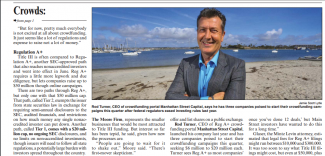
Rod Turner is the founder and CEO of Manhattan Street Capital, the #1 Growth Capital service for mature startups and mid-sized companies to raise capital using Regulation A+. Turner has played a key role in building successful companies including Symantec/Norton (SYMC), Ashton Tate, MicroPort, Knowledge Adventure, and more. He is an experienced investor who has built a Venture Capital business (Irvine Ventures) and has made angel and mezzanine investments in companies such as Bloom, Amyris (AMRS), Ask Jeeves, and eASIC.
www.ManhattanStreetCapital.com
Manhattan Street Capital, 5694 Mission Center Rd, Suite 602-468, San Diego, CA 92108.
THIS TEXT TRANSCRIPT HAS ERRORS IN IT THAT WERE CAUSED BY THE SPEECH TO TEXT CONVERSION SOFTWARE WE USED. DO NOT DEPEND ON THE TEXT TO BE ACCURATE. WATCH THE RELEVANT PARTS OF THE VIDEO TO MAKE SURE YOU ARE PROPERLY INFORMED. DO NOT DEPEND ON THIS TEXT TRANSCRIPTION TO BE ACCURATE OR REFLECTIVE OF THE STATEMENTS OR INTENT OF THE PRESENTERS.
From a regulatory environment. A couple of important things to know. The SEC says that we can raise money anywhere around the world, whether it's a US company or an non-US company, doing so via Reg S. That does not mean that the UK or the French regulators, the their SEC equivalents love or, or will be happy about you raising money in their countries. So, you know, there, there's an element of risk, right? If you actively raise money in those countries, in, in any country that's sophisticated enough that they have their own SEC equivalent regulator, they may protest and ask you to stop raising money. We have not had that happen one time yet, but that may occur. So there's, there is obviously a risk that the local regulator may not approve, but in many countries, the local regulators aren't thoroughly established. And in countries like Dubai, which has a largely I would say a less regulated market, they have regulations, but it's a less regulated market and there's a lot of money being deployed in startup companies. Online is fine there. And there are obviously other examples.
So when we are raising money though, these are the sorts of things you need to handle from an SEC compliance standpoint. We must have the, we must get know your customer information. We must know the identity of the investor without ambiguity, and they must pass the anti-money laundering tests checks. So we do all these things in our website platform for raising money, but those are requirements. And again, non-accredited investors, accredited investors and institutions can all invest via Reg S and it's legitimate to offer a better valuation to investors who put in larger sums of money. So you can do that, I suppose that may be very obvious, but you can do that via an online raise and we can support that too. But again, I'm not only trying to sell my company here, obviously, I am pitching my company indirectly. One thing to be concerned about if you are a US company is there's a thing called Section 12 G, where if you have too many investors in certain circumstances, you will be forced by the SEC to register your company and file quarterly PCA or B auditors.
There are legitimate ways to postpone or prevent that. I won't get into all the detail of that right now, but that is a hurdle for us companies to be aware of. And, and, and of course, if you take, if you take steps to prevent that being a problem, you have to take those steps in the legitimate way. Again, there isn't time here to de to describe that, but I can if needed covered that already. You need a private placement memorandum or similar, A Reg D offering requires a private placement memorandum. And really you need a very similar document for Reg S. And in the case where we're pairing a Reg S with a Reg D, which is commonplace because they are a natural, they're naturally cooperate, cooperate, they naturally enhance one another. Then when we have the Reg D, you know, maybe 2% of the document needs to be changed, maybe 3% to make the Reg S variation.
So it's inexpensive to make it when you've already got the Reg D, but if you're only doing a Reg S technically you can get away with a lighter weight document, but I don't recommend that you want to have all the right legal protections in place. And risk factors, for example, having comprehensive risk factors disclosed in your documentation is a really good way, both to inform investors what they're getting into, but also to reduce, significantly reduce legal exposure down the road. So you want a PPM like document and you know this cost involved in that, but it isn't difficult and you don't need to go file with the SEC and ask permission. You don't actually need to file the Reg S with the SEC, of course, they re they retain the right at all times to inspect everything you are doing, wherever your company is, whenever, when you are using a regulation which they promulgate. So if therefore, of course, one must always make sure to conduct these offerings in a proper manner such that the SEC if they inspect it will be happy with it.
Having a transfer agent helps you are not required to, but when you get lots of investors, you really don't want to deal with numerous investors and housekeeping issues and somebody transferring their, their beneficial interest in your stock into their trust fund or something, family trust.
THIS TEXT TRANSCRIPT HAS ERRORS IN IT THAT WERE CAUSED BY THE SPEECH TO TEXT CONVERSION SOFTWARE WE USED. DO NOT DEPEND ON THE TEXT TO BE ACCURATE. WATCH THE RELEVANT PARTS OF THE VIDEO TO MAKE SURE YOU ARE PROPERLY INFORMED. DO NOT DEPEND ON THIS TEXT TRANSCRIPTION TO BE ACCURATE OR REFLECTIVE OF THE STATEMENTS OR INTENT OF THE PRESENTERS.