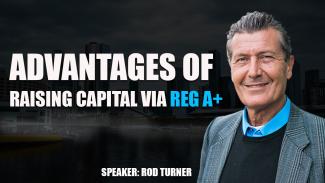
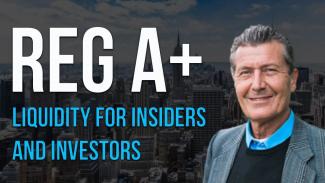
Use the Chapters list below to select the part of the video you want to watch.
Disclaimer:
The content in this webinar is not and shall not be construed as investment advice. This information is meant to be informative and for general purposes only.
MSC is not a law firm, valuation service, underwriter, broker-dealer or Title III crowdfunding portal and we do not engage in any activities requiring any such registration. We do not provide advice on investments. MSC does not structure transactions. Do not interpret any advice from MSC staff as a replacement for advice from service providers in these professions.
Chapters:
- Intro
- Who is Rod Turner and what is Manhattan Street Capital?
- From apprentice engineer at a UK nuclear power station to Silicon Valley
- Employee #12 at Ashton-Tate: 12 people to 2,000 and an IPO
- Building Norton AntiVirus from scratch at Symantec
- Why the Reg A+ rules impressed a seven-time startup veteran
- Founding the first dedicated Reg A+ platform in 2015
- Why Manhattan Street Capital skipped Reg CF and stayed boutique
- What differentiates the platform: tracking pixels, logic, and transparency
- Which verticals raise the most: real estate, biotech, and relatable tech
- Why Main Street investors fund biotech that institutions pass on
- The 15-second explainability test for online raises
- Proof of life: why stagnant offering pages lose investors
- Eye-to-camera founder videos and why they build trust
- Viral reach: the GolfSuites ads investors shared in droves
- How Rod suggested "Test the Waters" to the SEC
- The takeoff-speed problem: why tiny ad budgets never get airborne
- Insitu Biologics: 87% of reservations converted in three weeks
- Direct listings through Reg A+ when the IPO window is closed
- The Newsmax March 2025 Reg A+ IPO
- Cub Crafters, Red Bull, and 1.6 billion views
- Structuring offerings so institutions can invest
- Never prejudge your creative: the green company case study
- Optimization: the 7-second video ad that cut costs 3x
- Raising your share price mid-offering to reward early investors
- Why securities attorneys give contradictory answers on Reg A+
- Where to find Rod Turner and final advice
Rod Turner
Rod Turner is the founder and CEO of Manhattan Street Capital, the #1 Growth Capital service for mature startups and mid-sized companies to raise capital using Regulation A+. Turner has played a key role in building successful companies including Symantec/Norton (SYMC), Ashton Tate, MicroPort, Knowledge Adventure, and more. He is an experienced investor who has built a Venture Capital business (Irvine Ventures) and has made angel and mezzanine investments in companies such as Bloom, Amyris (AMRS), Ask Jeeves, and eASIC.
www.ManhattanStreetCapital.com
Manhattan Street Capital, 5694 Mission Center Rd, Suite 602-468, San Diego, CA 92108.
THIS TEXT TRANSCRIPT HAS ERRORS IN IT THAT WERE CAUSED BY THE SPEECH TO TEXT CONVERSION SOFTWARE WE USED. DO NOT DEPEND ON THE TEXT TO BE ACCURATE. WATCH THE RELEVANT PARTS OF THE VIDEO TO MAKE SURE YOU ARE PROPERLY INFORMED. DO NOT DEPEND ON THIS TEXT TRANSCRIPTION TO BE ACCURATE OR REFLECTIVE OF THE STATEMENTS OR INTENT OF THE PRESENTERS.
Hello everyone, welcome back to another episode of Test. Optimize. Scale.. Going to be talking about the world of capital formation, investor acquisition, regulation A+, and various different types of fundraising vehicles with one of the folks that knows it the best. Thought leader, founder and CEO of Manhattan Street Capital, Rod Turner. Rod, thanks for taking the time to join the pod here today. Thank you, Jason. It's good to be here. I've known you for years have followed your content closely. Want to familiarize the audience a bit. What is your background and how did you actually get into this space of capital raising?
You bet. Yeah, so I started out, I'll give you a little bit of a potted history. I started out in the UK as a professional engineer working, electrical engineer working on a nuclear power station. And at that time, less so today I would think, but at that time it felt like I either needed to progress rapidly as I was hungry to do. I started my career at age 15 as an apprentice engineer at a nuclear power station. And then they sponsored me through my university studies whilst working, etc. Which isn't as unusual in England as it is in the USA. In any case, when I got to the point that I was graduating and had to assess the situation, I felt like I needed to move into finance or sales to progress faster. So I switched into sales because I didn't want to have to do a second degree in addition to the engineering degree that I just got. And that was a more rapid switch. And then literally I worked for this computer company in the UK in a sales capacity. It gave me an awful geographic region to sell into because I was a new kid on the block. And I was very perturbed by that because it felt like it would take an eternity to earn my way out of it. So I came over here on vacation, both primarily as a vacation and secondarily to see if I could possibly finagle my way legitimately into the US. Went to Washington DC, New York and LA and San Francisco. LA being the third stop. Hit LA, contacted the English computer company's local operation, got an interview. I was there for a week, got an interview, got offered a job right away. And was very lucky, right? Because the CEO of that local operation, the manager of the local operation, was Irish, had himself emigrated 20 or so years before with his wife. And he'd already brought in an English guy from the UK headquarters operation. So he was the least intimidated by the immigration stuff. So then I checked into the situation with immigration attorneys and went home, resigned, rented out my house, sold my car, got a temporary visa, moved here, got a green card, became a citizen. So I was really lucky, one interview, great opportunity to relocate to California and get then as a result of that, I moved into micro computer software because I found that there was a phenomenal opportunity to get in to startup companies in the early 80s.
So in 1982, I literally became the 12th employee of the company called Ashton-Tate. They made a product called dBASE and it was a marvelous, marvelous opportunity from in contrast to selling computers for an English company competing with the US based and other companies in the marketplace. So joining that startup, we went from 12 people to a couple thousand in three years. We went public on the NASDAQ and we built dBASE to be the market leading database in the microcomputer software industry a long time ago. And I went on to do other startup companies, a company called Symantec where we launched the Norton AntiVirus, some of the other products. My team built the Norton AntiVirus from scratch, launched it into one of the market leading programs and had a lot of great success there. So essentially, now to move forward, I've done seven successful high tech startup companies, including this one. Some of them were those two, Ashton-Tate and Symantec were sizable IPOs that were rather significant in their day. And others that weren't as significant, but there were successful, liquid outcomes where we sold to public companies and so forth. So a lot of good fortune and a lot of hard work along the way.
So I found myself kind of wondering what to do next in 2014, 2015. And I saw the Reg A+ announcement by the SEC in March of 2015 and I went through the regulation. I was really impressed with how pragmatically written it is because it allows for, we're getting interruptions and no worries, I understand. Anyway, so Reg A+ is really well written. It's a pragmatically written rule system. And to get that out of an entity as a regulator, as giant as the SEC, frankly, was shockingly impressive. Reg A+ is a wonderful rule system, in my opinion, for providing access to capital formation methods and liquidity to companies that they otherwise wouldn't have. And for regular investors to get into companies and have rapid liquidity in some cases that they otherwise wouldn't have had. Super rule system. So I'm well written from a pragmatic standpoint. So for those reasons, I decided to start Manhattan Street capital, which I then did in March April, actually in April of 2015. So just prior to Reg A+ going live. So that's the reason for Manhattan Street capital.
Essentially we had a false start at the beginning. I figured it was going to be a gigantic market and it would be so big that I should specialize from an early stage. So initially I named the company FundAthena in order to focus on women-led businesses and minority-led businesses thinking that that would be relatively unattractive space for everybody else. And I could build a solid footing there and dominate the space long term. So a few months in it was apparent that there were so few companies that were open or even had heard of Reg A+ that limiting myself to five or 10 or 12% of the market was ridiculous. So I renamed the company with the doing business as, the DBA of Manhattan Street capital. The corporate entity is still FundAthena. And that was a smart move at the time. Right now we can segment. We could specialize. But back then it was way, way too early. I'm glad we made that change. So we've always been a boutique. We've always been focused on attracting very strong companies that want to rub shoulders with other strong companies. We've never been about having hundreds and hundreds of offerings simultaneously. We chose not to support regulation crowdfunding when it came along, although it has certain merits, it certainly has merits and more merits now since they raised the maximum to $5 million. So I've nothing against Reg CF actually, but the expense of supporting FINRA to very expensive bureaucracy to support from a regulatory compliance standpoint. That was too much to take on in my opinion. So we focus on Reg D, Reg A+ and regulation S offerings. Those are our primary focus. We've had good success with helping companies in those fields.
We're very different than, there's a lot of big platforms these days, especially with Reg CF. You've got the StartEngines of the world and so forth, quite a few big platforms. We were the first dedicated Reg A+ funding platform when we went live in June of 2015. StartEngine already existed, but they were doing Reg D offerings at that point. They added Reg A+ later. They've done fine, more power to them. But we're different in that we're selective who we work with, we don't go out selling ourselves to companies, they come to us because of the content we publish to educate and inform. And then we, it's a mutual evaluation today like us, do we like them? We're selective who we work with. And we add a lot of value. Our fee structure is sensible, we don't overcharge. We are not a broker dealer deliberately because I don't want the expense of supporting FINRA. And also to my mind, as technology and markets advance and regulations advance, I feel as though the least expensive future way of raising money will be outside of broker dealers. Outside of the expense of broker dealers. So I don't really want to go down that path. That's another reason we didn't. So we've been fortunate and I continue, right now I'm really fortunate, we're really fortunate with the caliber of companies that we've been able to work with, that we've been able to attract. Some lovely companies with really great people doing really impressive things, things that improve lives of human beings in biotech, save lives of human beings, quality of life stuff that really matters. From the get go, when I launched Manhattan Street Capital, I didn't do this because I needed the money. I did this because I wanted something worthwhile and interesting to do. And frankly, I had another goal which is that I want to do and like to do altruistic things. And the scale that I can do them as me personally is limited. We have a very successful company or anything and you can do a hell of a lot more good stuff. Whether that's helping companies that otherwise would have had a difficult time raising money because of limited budget or because of the focus, if they're focusing on something that's going to improve humankind, then we'll help them anyway, right? That kind of an approach. I can't say that we've been so rich and so exceptionally successful that we've done grandiose things on a large scale with spending money on stuff. We've certainly done some innovative things to help companies that needed help and we're doing really cool things. So I feel good about that. So that's kind of how we got to where we are a bit.
And I would say what differentiates us as a practical matter is that given my technology background, our platform isn't just a website, it's a lot deeper. And we do think in our platform that none of the other platforms, even the big ones, are able to do or have chosen to spend the money to do, we have logic built into our systems that others haven't bothered to do yet, which makes for easier investing, for a configuration of offerings in a more appealing manner and better transparency as well as more efficient marketing. We jump through hoops. You know what it's like as an agency when you've got a platform that you want to optimize, that is to say an advertising platform that you want to advertise on, that you want an organization, feedback through, you want the AI, you want pixel tracking, when the funding platform refuses to support that tracking pixel that's devastating for efficiency, right? And we always jump through the hoops to make those tracking pixels work. There's never been a time when we turned a company down because we're a boutique. You know, we've never had more than eight offerings at one time. You know, we're not about huge numbers of companies. That leads to the other thing, which is that we're really savvy to the advisors out there, the attorneys that are great, to the auditors that are great and cost effective, to the marketing agencies that are great. All the different service providers, the transfer agents or another example, you know, the only instance where we've had a service provider that caused us grief was in the early days, we used a rather well known bigger transfer agent and they were hopeless, hopeless, and accepting an email and having a notification from us that the following group of investors have now been issued shares, now get them on board on your platform and have them learn and easily have access to their online account. That was the only thing we found where we had loads of complaints. So we switched to a more pragmatic, more efficient online transfer agent where the transition to doing it online works really well, right? As the only mistake, we fixed it quickly, but that's the only time we've had regular complaints. I'll get hold of my shares. How do I log into my account? That sort of stuff, right? Yeah, so we are an advisory service. We understand the nuances of Reg A+ really well. I would hope better than any other funding platform. I believe we are better at understanding all the nuances, not every single nuance, but more than other competing platforms when it comes to finagling the best way through figuring out the best way to conduct an offering successfully. Reg A+, Reg D, Reg S, they all have nuances, but Reg A+ has them the most.
Your presence in the space speaks loudly with your past success, seven companies. I love how you first entered this market to make it easier for underserved audiences to be able to raise capital and go beyond their first degree networks. You'd mention you have female founders. There's so many different audience sets of CEOs and founding teams that if they don't have an investor that they can call directly, that they're not going to get funded, companies fail for being under capitalized. Like you said, you didn't need to do this. You wanted to saw the opportunity in the market. Again, beginning of regulation A, Reg A+, sorting out technology and using your background, of course, because you understood, hey, we're going to get thousands of investments on each one of these deals that are successful. And we need to make sure it's a smooth process. We can't have anything wonky here. So you've been able to refine that, find the right partners, find the right approaches. You were talking about biotech a little bit. There've been any surprises and being involved since 2015, 2016, in terms of what verticals move the most, which teams and the different dynamics, anything about the types of companies that are doing the best using these types of tools for capital formation.
Well, lots of learning, lots of surprises. Some of them were, took me a while to recognize the reality. When it comes to where the biggest successes have been, they're all explainable, but they weren't all obvious at the get go. So we've been since Reg A+ started in 2015. It's been mostly a good real estate market at the moment, less so in commercial and more so in residential in some ways. But it's been a good run for real estate. And there's a lot of people that have the expertise or believe they have the expertise to assess the market, that want to put more money in play, that want to have more real estate exposure, where they don't have enough time or necessarily spare a capital to go buy another house or buy another condo building. And so real estate has been a natural fit for them. And it's a general and more conservative investment because unlike a tech company where three key people leave the company dissolves and falls apart, there's a lot of real estate company, the assets still exist, but generally they're more persistent. So real estate has been really successful. Look at Fundrise. Well over two billion dollars raised in Reg A+ offerings. They launched with real power from the get go in 2016. They were the first company to be so courageous with Reg A+ and the summer of 2016. So real estate has been really big. Biotech is both wonderful and terrible at the same time. The wonderful part is that human beings care about other human beings. We've got friends and relatives with Alzheimer's or cancer or various other afflictions and being able to vote with our feet and back companies doing things to help save lives and improve the quality of life of other human beings. It's a wonderful thing. So that's the good news is that it's easier to raise money for biotechs in a Reg A+ than it is through other mechanisms because really cynical investors, Reg A+ investors, I'm sorry accredited investors and institutional investors, they tend to look at biotech with a more jaundiced eye because of the length of time and the amount of money it takes to get through the FDA clinical trial process. Main Street investors, if they love the company, they're going to vote with their feet. They're going to vote emotionally more often. So we can more easily raise money in a Reg A+ for wonderful biotech company doing a wonderful thing. So biotech lends itself beautifully and some med tech companies lend themselves beautifully to online offerings in general, Reg A+ in particular.
The horror has been an horror, perhaps that's an overstatement, but the unfortunate characteristic I see sometimes is some biotech companies are led by incredibly genius scientists who over analyze things or believe they should be able to get smart enough about everything that they can slice and dice everything and they have a tendency to go down a rabbit hole on the wrong thing. And you know the way it is, you've been doing this for a long time. When you're focused on answering questions on what you know is the wrong question on the wrong topic, it's very frustrating because you have to answer the questions, but it's the wrong thing. And there's a likelihood if people focus too much on the wrong thing, they'll make the wrong decision because the outcome doesn't matter anyway. When there are things over here, we should be focused on and they're not even paying attention to. So I think that's a focus, a result of very high IQ people who are used to being the smartest person in the room in every instance of their business life to date, maybe, I don't know. So that's been frustrating. Lovely companies that we could have had an amazing success with who zipped off in some other direction that was preordained to fail because it was the wrong direction, you know? That's been frustrating. So real estate, biotech, great in general.
And tech companies that relate to people, they have solutions. So if somebody's going to invent a remarkable long-lasting, high-power, what am I trying to say here? Battery for my smartphone, tablet, this kind of plug and play and extend the life of the device for hours and all the days on end. A lot of people are going to buy that and a lot of people want to back. Obviously, you know, and then you see companies that are inventing new tech, new new materials like graphene is a marvelous material that has huge potential to expand. Well, to improve the lives of human beings and to make things more cost effective, including batteries, you people are using graphene as a material to improve the efficiency of batteries. So there's a company, Avadain, that you know that I'm an investor in. So I have a bias, I have to admit and volunteer that I do have a bias that other people invest in that company than I stand to benefit long term. But it is a wonderful company doing, addressing a gigantic market, right? Those are the sorts of things that are relatively easier to raise money for and are delightful and easy to explain. These companies that are boring or impossible to explain because in an online opportunity, in an online venue, which is what we focus on, companies can be strategically outstanding with great people with a really seriously great opportunity. But if we can't explain it in 15 or 20 seconds to get people's attention, probably it won't suit an online raise. It's probably not going to work. So I've had to say no to some really great companies over the years because hard to explain it online. Okay, in a 30 minute meeting, if you can get a meeting with someone, you may win out hands over fist, but you can't buttonhole people online and grab their attention for 30 minutes. It takes easily available wonderful content.
Agreed. And I would highlight those verticals as well. MedTech, HealthTech, BioTech, founders have shared with me CEOs that their more traditional approaches to capital have dried up over the past year, two years, and I find more of an appetite to be able to use these exemptions towards their rounds, towards their capital raises. And with the right targeting, leads, right investments coming through, given whether it's a Reg D and more of a lead generation at first, a regulation A+, and measuring the investment conversion immediately thereafter, I've found the right storyline. And like you said, being able to take complex ideas in depth, messaging, and be able to reduce that into a few sentences, a few words in many cases, given the appropriate format on any of the marketing placements, activations that we're doing can be very tough. It could be a full undertaking. How do you bring in all of the great things a business is doing into just a few words? How do you get it to pass the glance test to then get a prospective investor pulled in to analyze the deal further and let and hopefully inspire them to the point of action? We work with the issuers directly. I get to speak to some investors and conferences and things along those lines. You are the intermediary.
Most challenging thing I found really with companies raising money online is the tendency to pick a few three of the things or four of the things that need to be done and miss out beyond is to think it's okay. The way I look at this is that we're dealing with optimists in the first place. The only people who are contemplating making an investment online have to be optimists. I have family members who would never use a credit card on the internet to do anything. They'll come to me and ask me to buy something for them and they'll reimburse me because they're too late to use their credit card, that kind of thing. So we're dealing with optimists, but we should be reasonable in how much optimism we require them to have. It's one thing to see a company doing something that's interesting and promising. It's another thing to trust them enough to put your money in play. Of course, we draw them in with advertising and if we're lucky, they love it enough that they invest right away. But a lot of people will initiate, show interest at some level and then hang back and wait for us to convince them. They need to have more credibility. They need to see more credibility. It's up to us to demonstrate that. So things like only having two team members displayed in the offering page or withholding information about the other parts of the company or withholding strategy, withholding plans, all of those things are obviously silly. But it's terrible. And most people don't make those mistakes. The more common mistakes are not to provide ongoing proof of life. Yes. It's like if you go to a bookstore or a library and nobody's there and they have no books, you leave right away. If you go and there's 16 people and 28 books and you come back a week later and the same 16 people and 28 books, you leave right away then too. That's the show of life. You have to show that this is a living, breathing environment. It's buzzing. It's like if you don't get on the train, the train is leaving the station without you, you'll be missing out, dude. So that is where I see the greatest difficulty. And also the human engagement.
I do a lot of videos to help inform CEOs and CFOs about how to raise money online, as you know. And what I want to have done, there are things I've seen and I love is that I'm the man on the camera. Is that people who watch my videos, when I first meet them in person, they feel like they know me. Yes, because I was talking and looking at the camera the whole time and they feel like I was talking with them or to them. And so I need to be careful when I have my first meeting not to say, hey, I'm pleased to meet you because they feel like they already met me. It's I'm pleased to see you. You know? And I love that. I tell you, yeah, it's super. So when I get video people insisting that they do, they record the videos like this, whether the person is talking to someone else. This is very, very weak stuff. I want eye on camera, but we want to build trust, right? We want the audience to feel as though they are part of this journey. They selected the team. They selected this company they want in. They're backing it. They have feelings that we want them to feel like they made the right choice. Yeah. Me and Jack, we go way back. Yeah. I'm on the team, dude, right? We want that. It's so hard to get companies and CEOs to participate in that way, to produce the content on a regular basis, to get people further and further involved where they're on the bus. They're experiencing this vicarious entrepreneurship journey. It's not just, here's my money. Tell me about it later. It's a journey. It's a shared experience. So absolutely better results when we get that kind of engagement.
And I've found fun with this. You know, there's a CEO who we worked with before where he's a great speaker, very good style, very knowledgeable, but he was really resistant to doing videos. But we did the first couple of videos where I was there on a Zoom call and he was at cross the room and I would ask him questions via the Zoom, which we edited out and he would answer the questions one at a time because he can answer every question just like that. He got more and more comfortable with it. And nowadays he does a video every week. He does it even when he's not raising money. He wants to keep his investors engaged and excited about the company's progress. Absolutely lovely. He was always a natural, but he had this reluctance to get started. A lot of other people aren't natural. Then they've got to overcome their built-in reluctance to speak publicly, to be recorded, to expose themselves publicly. But it makes all the difference in the world. Right. I mean, you and I know this. Speaking to the audience, we don't know it. It's intensely valuable.
I spoke to a guy a couple of days ago, a prospective customer, and I'm not going to tell you who he is. I would be inappropriate. But the point is that somebody unrelated in his industry made a post and in a matter of a few days it had millions of views and it touched directly on his business. He brought this to me and I already knew that his company had potential for serious engage with serious scale. It's like, well, what better example do you have that this has that potential? Because this really short clip that a young woman made that related closely to his, wasn't about his company, it was about his space, his market. Absolutely a thing of beauty. And again, we know these things can happen. You've got to press a bunch of buttons and to get lucky you have to keep on pushing. But when the potential is there, it's a thing of beauty. We have a golf company, golf suites that we've helped with. We have their Reg A+ offerings. Golf is a very popular game. When their ads were running, we got people sharing their ads to their buddies in droves, loads of people. And the CEO's sharing was complaining to me. He was complaining they were getting so many comments on the ads because there were so many shares. Some of the comments were negative, which you always get. The scale of exposure, secondary exposure of their advertising was off the charts because people love what you love the company, what they were doing, right? What a beautiful situation. He was complaining that somebody was needed half time just to answer all the comments on the act. The community management. That is the ultimate marketing right there, the peer to peer marketing. Yes.
Absolutely. And we do speak the same language, Rod. I talk about that crowd effect and the momentum, headline worthy announcements on a week of basis and what it looks like as a prospective investor to see one deal and you're doing your due diligence. Every time you look, there's more investors. They have a new partnership. There's a strategic testimonial investor testimonial present and the ones that have no updates. It's wild to me. I'm also applying the digital metrics you're talking about just doing a few channels. I mean, I find it's 17 different touch points. I was looking at their analytics system. They have something advanced and put in there. They had over 43 touch points and I could see this email newsletter, this ad, all the different things they engaged with to get there, to get to that point of action. I'm just throwing numbers at it. It could be 100,000 visits to an offering page to get 1,000 investments. If the average investment is $3,000, it's $3 million raised. It requires that type of numbers game.
Oh, yeah. Yeah. That's actually another thing where when the SEC started going down the path for formulating what they were going to do because the federal government required it off them. They were reluctant this fair to say and they were very resistant. They thought there'd be a lot of fraud. I think that's what they discovered but was. They had an open forum and there was a lot of people posting self-serving stuff, pitching themselves, making themselves look famous or whatever. I suggested that I call it pre-marketing that they allow entrepreneurs to test market their companies before having to spend money on audits and on offerings and SEC filings because guess what? If you spend $200,000 or $100,000 to get to the point that you start marketing, test marketing your company and you find nobody cares or it's hard to explain, this is a waste of time and money. So, sure enough, they adopted that idea and called it Test the Waters and then I trademarked the use of that term in multiple different ways because I was the one paying attention because I was the one that suggested the idea. So that was nice. That's Test the Waters. But the point of getting out really, I don't always like Test the Waters because if we're so weak in our belief about the company, perhaps you shouldn't do this. I don't want to do half-hearted stuff. But it takes time. It delays the whole process. But the bigger issue isn't that. The bigger issue is that as we know, when you start promoting a company, you don't need to spend a lot of money in order to figure out which ads are working, which ones are not in order to build efficiency, find the efficiency, turn up the volume on the good bits. If you stay for a long time and a tiny budget schedule, you never get enough dynamism going to build a buzz in order to get serious engaged, but in order to have the thing take off. It's like being in an airplane, taxiing up and down to 30 miles an hour, you will never take off. You have to get up to take off speed in order to get airborne. So some companies stay stuck in the evaluation mode and don't allow themselves to be venturesome enough to get to take off. That's another challenge. They never hit that 30,000-foot altitude. They want to be there immediately. They don't understand. They have to build up to the takeoff point and stick with it long enough.
It's funny what you say about pre-launch and test the waters. I love pre-launch marketing. I like test the waters. I've seen mixed results because the reservations that occur during test the waters and you're testing marketing channels along the way. You start to see what's working. You're seeding relationships with publishers. This could really come to fruition during the campaign itself. But I'll find 10 to 50 percent of the reservations actualize so you could put out of this effort in, not get too far away. It's hard to get conversions from them.
We had one company. It's called, I can talk about it because it's in the rear view mirror long enough. I can say this for that. We own stock and I personally invested in this company too. So I stand to benefit if somebody does something dynamic with them. I don't think they're raising money right now. Insitu Biologics. We help them raise money. They produce a non-addictive, non-opioid painkiller medicine for surgeons. They have other uses for it, but their initial uses for surgeons. So some of these surgeons, just to wrap up, they've sliced open to the person and they insert this gel in the location they just worked on. They stitch them up. This medicine is in a bioidentical gel that is naturally absorbed by the human body. Gradually releases the pain killer medicine where it is needed. So you don't have addictive opioid-like pain medicine. Seriously relevant in this opioid epidemic. So a very good company, you look at a very good thing. We did a really successful Reg D with them where we raised $380,000 starting with the Wednesday after Thanksgiving, finishing December 31st. We raised more money in January, but to do that from zero in a Reg D only in that window of time was wonderful. But what did I bring this up? What was the reason for this? Oh yeah. The reason is that they, the founder and primary investor spoke on multiple panels in the biotech industry and they talked about their upcoming Reg A+, and they invited people to make non-binding reservations ahead of the Reg A+, being qualified. And they told them that by making those reservations, they would lock in the initial issue price. So they got a sizeable amount of reservations. And when we went live, 87% converted in three weeks. I think it's a record. I can't prove it because I don't have the data on everyone else. But it was wonderful. It was a wonderful dynamic to already have that in the bank. It was something like a million or 1.6 million or something. But without any, you know, before we started advertising in the Reg A+, it was just a thing of beauty, thing of beauty. Anyway, so stuff like that.
It's such a beautiful vehicle in the exemption, the regulation A+, we've raised groups have gone straight to direct listings, have worked on price rounds, public companies that there's so many different applications. The space saw substantial growth in 2025. Regulation A+, raised that year compared to prior. A lot of successful rounds occurring right now here in 2026. Everything that's been part of that has done very well.
One of the things I want to interrupt to you, but at least one of the things that I've been doing high tech companies for a very long time as is evidenced from the earlier discussion, is certainly windows of time where they say the IPO window is shut, it's closed. And some people think that's because the SEC won't accept filings, which is nonsense. The SEC accepts filings when you make the filings. They don't care if the market's tough. The underwriters care. When the window is closed, it's because the underwriters won't go to bat. You can have a great company, the economy or public because the market's cold and they're not going to waste their time. The lovely thing about Reg A+, is that once you raise enough money from enough investors, what you could do in a window of time when the IPO window is closed because the IPO market is too cold. If you can raise enough money from enough investors, you could do a direct listing. You mentioned it just now. Direct listings are a thing of beauty because you've raised the money already. You've just got enough investors now that you can do a direct listing and you have to do it inexpensively without underwriters, without all that rigmarole. So Reg A+, is a wonderful instrument. I guess Newsmax is March of 2025 IPO. They actually did an IPO. They had an underwriter, but it was all done via Reg A+, it wasn't an S1. You could do an underwritten IPO with Reg A+, that's great. Not many people know that. But the direct listing is more beautiful to me because even in a market where you can't do IPOs, you can still do a direct listing via a Reg A+, very cool move.
Do you see this regulation A+, in a year, five years down the line, ten years down the line, to become larger and larger? Is this going to be a primary approach towards capital formation? Where do you see this vertical, this space going?
Well, the short answer is yes, I do see that. Exactly when it's hard to say. I was expecting it to grow faster than it did. That means what? Yeah. I mean, I was, you got to be an optimist to be an entrepreneur, otherwise, you know, nobody would do anything. But having said that, Reg A+, is a wonderful instrument for the right companies. And as more and more companies come to realize that, which is happening, then more and more of them will use it to raise money, to go do an IPO with underwriters or to do a direct listing without underwriters. Because it's a natural instrument. As is evidenced by Newsmax, Newsmax is a particularly strong example because they have a giant audience of which they're reaching out to at all times. So for them to include a QR code, which links straight to a Reg A+, offering for their next Reg A+, would be a piece of cake. And they didn't do that, I don't believe, but that's, you know, that's up to them what they choose to do. Any company that has a lot of exposure is in a lovely situation like that. We did a Reg A+, with a company called Cub Crafters. And during the time we were raising money, Red Bull did a promo with them where a pilot, with the participation from the CubCrafters, is their fan company, they have a license to make better and better versions of the Piper Cub. They bought it from the Piper Cub company when they went bankrupt in the early 90s, right? So they've made various new versions of the Piper Cub. They got one of their Piper Cubs in a very good pilot. With the help of Red Bull, they landed that airplane on the hotel, the Burj Al Arab, I think it's called, in Dubai. It's a helicopter landing pad. Yeah, top near the top of that hotel building. Quite a backdrop. 75 foot diameter, right? They landed and took off from that, which is seriously difficult in any vehicle, but especially an airplane that needs a runway normally, right? So they did that. The videos celebrating that event had 1.6 billion views, 1.6 billion views. Now of course, Cub Crafters was a part of it. It was great for them. They didn't have the opportunity with Red Bull to display a QR code on every video. But imagine a company that controlled the channel where the videos were under their control and they can have a QR code that links straight to the Reg A+ they're raising money with. Wouldn't that be fantastic? And companies that are in the business of promoting musicians or promoting video, excuse me, movies or that have a scale of exposure, those companies can leverage that exposure with a QR code and raise money like falling off a log. There are better ways to say that, but pretty good.
Being able to utilize the existing audience, partners who have distribution and can get it out to the right people, I think we'll need more investor success stories. There are some very strong ones on the issuer side, but as there's more liquidity events from shareholders that they're talking about, sharing with their friends, it's going to get much further.
Yeah. Yeah. But the key, so the key part to that really, Jason, I believe is a key part. A key part of it is companies that are further along that have very big upside leveraging Reg A+. So if we, if the, if the companies that are out there now that have scale potential, that wanted to go public quickly and easily, they could use Reg A+ in an advantageous way. If a third of them did it versus not doing it today, that would just revolutionize Reg A+ overnight. It's because it's because the right companies in the main haven't been using Reg A+ because they don't know. And the established vehicles and the established professionals, especially the underwriters and broker-dealers just don't pay attention to Reg A+ because it's essentially displacing them and it's new and different.
Yeah. New different, again, enough tools and proven channels to be able to really have a large scale campaign. I mean, this is a big stage for the crowdfunding space as a whole, but I definitely believe this is where the growth is going to occur. And if somebody is listening, viewing right now and in preparation to launch their regulation A plus campaign, what should they be absolutely applying to their strategy to their plan? What should they be planning to test out towards the success of their round? I look at growth as a series of tests, look at the success of one of these rounds as scaling the right test. What should they be looking to incorporate in their fundraising plan?
So I mean, that comes, I think there's two aspects to that. One is structuring the offering so that institutional investors can play because they won't, if you don't give them the right advantages for investing large amounts of money. So putting in place terms to encourage them through bonus shares or through a parallel Reg D offering to give advantageous terms to large scale investors. So the institutions can participate. That's an example of the logistics of establishing the Reg A+ in the right way in the first place, having the right class of shares, those sorts of things are obvious, but then they aren't obvious to a lot of people. But for when it comes to testing, I've been doing, you know, since my Ashton-Tate days, I've been doing marketing in various mediums in different ways. And I've learned, even though I'm really pretty good at marketing, I've learned not to prejudge what will work because you've got four different messages you can approach and try and the one that looks best is often not actually going to work that well. That's a key part. I mean, it's very, very well. They do. You might want three or four different landing pages tailored to suit three or four different advertising campaigns, pushing different lead messaging in order to figure out which one works. And it's not just a matter of which one gets the clicks is the which one gets the clicks which convert into investment very obviously because the buzz doesn't get it. You know, we did a really lovely green company some years ago where the Reg A+ where they had two broad thrusts in their advertising. One was to people who were interested in the green side of this company, the planet saving, looking after the world as a whole and increasing efficiency. And the other was this is a giant market. You got to be in it. Look at the scale of the upside. They were taking waste food and converting into very expensive food ingredients that were bioidentical to the original source for less expensive. Of the two campaigns, the green one took off and was amazing. I had loads of sharing, loads of enthusiasm, but very little investment. Right. And the other one here's a commercially successful giant market opportunity which usually successful, but less clicks. The conversion of clicks to investments was beautiful. But it wasn't the buzz wasn't there as much. You know what I mean? Yeah. So that's a classic example where I've learned not to judge, not to, not to think I know which is the right messaging, be willing to test and test and tweak and adjust the learn over here and apply it over there. Because that's what it takes. Otherwise, you don't get the efficiency.
It says that you really understand marketing that statement alone right there and many in the finance community, admittedly don't. But that fact of, hey, we're going to need the data to show us what's producing. We'll have assumptions going in. We're going to set different variants, different AB tests of the audiences, the creatives, the messaging, the visuals we get to them, the funnels. We take them down and the associated calls to action. But we're going to have to seek out where we're giving the best quality. We're going to invest the returns and ultimately do more of what's working over time. Not everything works right out of the gate. I find optimization to be where marketing talent is really, you know, showcased. What do you do when it's not working? Or just when you want to improve the results? Have you found anything to be particularly effective in terms of pivoting and optimizing to be able to improve the results?
So many things. I mean, to me, being a successful businessman, business person leader, it's all about what you're saying in your, the title for this podcast. It's about testing and adjusting, paying attention. I mean, I'm always learning everywhere I go. I go to a group that my ex-wife wanted me to go to because I was her husband. And I meet people and I learn interesting things that I hadn't ever thought of before. But I end up applying in completely different parts of my life. And then people think I'm innovative. I'm not innovating at all. I'm paying attention. And then I'm applying the learning from over here over there. So to me, that's what this whole thing is about entrepreneurship, success in business, marketing, capital raises. It's about paying attention. So if there are just so many examples of that, I don't want to think of particular examples. Well, I'll give you an example. We were doing a capital raise in a Reg A+. The marketing agency involved was very happy with the results. It was quite cost effective. We weren't spending too much. We were spending $10 per $100 raised of advertising. Not terrible. I wanted them to do video ads. They didn't want to. I got the customer to insist that the agency did video ads. So then they started experimenting. They did long form and short form. And they came out with one seven second video ad. They just kicked ass. I mean, it reduced the cost and to about $3.30 per hundred raised online. Oh, yeah. It was amazing. It wasn't subtle, right? That was about the willingness to experiment. Wasn't that I knew video would work? It was that I wondered why we hadn't tried it and we should try it and let's see what we would get. Not that I would say, oh, it's got to be a 30 second video clip. I didn't know. All I knew was we hadn't tried this avenue that we should try. We did and it kicked ass. I mean, it wasn't subtle at all. Wonderful. Maybe look good in the moment. That is at the point. The point is being willing to experiment, right?
Yeah. Being willing to test and tune and adjust. You creative formats, not being satisfied with the results. It sounds like 10X and then you were able to take it to 30X. Yeah. Amazing. I mean, that's astronomically a different result when you look at a $10 million round and what's required to be able to get the spends to produce at those levels. And you've worked on some of the top rounds to date, some of the top campaigns in the space. Any tips, any examples towards scaling and seeing that level of performance? Hey, we're spending $3.33. We're getting the 100 back. How have you been able to ramp things up and play at larger levels from there on some of these rounds?
It's mostly been getting efficiency and then scaling up accordingly. To me, it's a straightforward block and tackle part of successful marketing is to learn what works, do more of it, and turn off the things that don't work. Don't stay blindly attached to stuff that might be working, you know, that is drifting in the background. They'll get stuck in an inanimate state of play. So I would say legitimately raising share price from time to time, stepping up valuation. A lot of people don't know you can do that in a Reg A+ where it is actually a public offering. You're selling shares to the public and you have this public ongoing obligation of reporting with audited financials thereafter and so forth. So people tend and frankly, with people who have experience with venture capital, there's a fixed price. You get in or you're done. You miss it or you get in or you miss the boat. In the case of online offerings, we're able to raise the share price as long as we do it within the SEC guidelines. Within their rules, it's not like they tell us exactly where the baseline is or how to do it. And you know, I mean, we put together the pieces. Rewarding the earlier investors for taking the risk they took is a wonderful thing to reward them and to get people to stop sitting on the fence. And it's a legitimate show of strength. You know, you're not going to raise a share price if the offering isn't succeeding. So telegraph in that confidence from that success is a good thing to do. It's a useful thing. And what I like about it really is, I know I'm digressing a bit from your question, but still, but what I like about it is that typically a company will come in Reg A+ that has a cap of 75 mil. You can raise more than that via a parallel Reg D as we both know. But my point is that typically a company has a number that they need to raise. They don't want to do this if they can't raise that number, say $18 million. That's it. We're not going to be if we can't see our way clear to raise 18 million, why would we do this? Fair enough. Would you like to raise more? Yeah, if we could hit 46 million, then there's so many other things we could do. We could accelerate our position, but you know, we could scale up faster or go wider internationally faster, whatever it might be. So the ability to go live with an offering that's priced according to this 18 million nut that we got to beat, that we got to achieve and then raise the valuation as we go to manage dilution. So because if we raise 46 million on a valuation that works with 18, we're going to have way too much dilution. That's unacceptable. Being able to raise the valuation as we go and manage that. It's like a beauty, right? A beauty. The Insitu Biologics company did that. They were the first company that we did that with, whereas their decision making their approach, they paused and significantly raised the share price and it worked beautifully because of the state of play in the raise and also in the stage of development of the company.
We're great integration of marketing as well as the administrative side, legal accounting, raising the valuation. I like how you said that that state of confidence up by increasing the share price along the way as well. I always point towards the immediacy and how we see a lift of conversions during those developing events. I find not every portal observes the rules the same way. There's one I won't name, but says you can't do share price increases, in a Regulation A+ many of the top ones do this many of the top ones. We've been a part of do. So it always is amazing to me that the interpretation can differ from one group to the next because this is an instrumental piece of a successful Reg A+.
But yeah, that's another whole thing because the, actually I'm going to move the camera and maybe a bad there is the best place. I want people to feel like I'm looking at them. That's right. Beautiful. The, you know, when you speak to three experts and you get three different answers, you know, you've got more work to do, right? And that happens often with securities attorneys. I can't tell you how many things, how many situations where I've got contradictory advice and I've had to dig deeper. And there's been situations where the SEC's practices have evolved, right? And the best securities attorneys, for example, the best securities attorneys over many years would say to me when we had a customer that wanted to do a Reg D and a Reg A+ at the same time, they would say, oh, well, if they're selling the same security in both, you should have the same share price. Can't deviate from that. The SEC won't allow you to deviate from that. So then when you see Boxabl, they did, they offered in their Reg D up to 75% discount in the Reg D over from the base price in the Reg A+. They were offering up to 20% discount in the Reg A+ through bonus shares, which they were allowed to do, but up to 75% discount in the Reg D. And the SEC has allowed many companies to pursue that same model of discounting to the volume investor, someone that's putting in millions of dollars can get a better price than somebody that's putting in $300. They have allowed that. It's become a normal practice now. Not everyone knows that. And this is an example where some platforms say, no, no, no, absolutely out of the question and others are okay with it. And there's been other numerous other situations like that. I figured out a legitimate way in a debt offering to offer the equivalent of a share price increase. I figured out a way to do that within the rule, within the rule has to be within the rules. I figured out a way to do that. Nobody's done that yet, but I love it when I find a way within this tightly regulated industry that we're in to find ways to motivate investors to do to attract investors, to motivate investors and reward them for jumping on board.
Absolutely. It sets the right foundation, communicates the right things to prospective investors and those building blocks are what's required to get to those higher levels. I find the top 10% of issuers really get all of the investments. The bottom 50%, 50% are pretty stagnant. So being able to use these tools and act within compliance of course can be the difference from a marginally performing campaign to one that hits the full max and oversubscribes. Mm-hmm. Yeah. Yeah. Well, Rod, I can't tell you how much I've enjoyed this conversation. Yeah, I'd like to be able to talk shop with you here. I'm sure some of the audience would love to get in contact or at least learn more about Manhattan Street capital. Where's the best place for them to go to learn more? Any final thoughts, any final statements you want to leave us with here today as we begin to wrap up?
Yeah. So the contact me side of this is my name, Rod Turner. So it's like Rod Stewart and Tina Turner crossed, making Rod Turner. And at Manhattan Street capital, spelled the way it is above my head in the background image, email me there or just go to Manhattan Street capital and use our search feature to look for content or scroll through the blogs because we have a heck of a lot of great content probably more than any other platform when it comes to helping CEOs and CFOs figure out the capital, the online capital formation context for Reg A+ Reg D and reg S. So come to the website, check it out, do a search. We have an AI chat bot on our site. Very smart because AI is smart and it learns from all of our data and all of our articles and video content and so forth. So quiz it, it's impressive the responses that people get from that chat bot.
He's learning and Rod, you are so personable, open book, transparent about what works, doesn't work in the space. You're at the forefront, you know, talking about these debt deals and how to structure things within compliance but be able to format higher levels. Want to tell you how much I appreciate the time. Took all page and notes and you know, my own learnings, I'll take back to my team as well. But it's that difference. It's like you said with the founders of speaking directly to the camera building engagement I'm always amazed by how many investors reference the founder by first name as if they know them and have that tight relationship as you described. So thanks for taking the time to do this here today and and I'd love to have the same type of presentation for your viewers.
Yeah, thank you. And like those of you who are watching, I hope you enjoyed this video, found it to be useful, happy to answer questions. Just literally send me an email and I'll give you feedback either just in an email or happy to have meetings with you to and give you advice on what to do. One of the things it's fun for me is that having done numerous startups now and done numerous IPOs, one way or the other, both as one of the senior executives at the company or we've helped four companies do IPOs via Reg A+. Not many people can say that. So with all this experience that I have, a lot of stuff is easy for me that is not that easy if you haven't been down the path. So I can help overcome problems pretty straightforwardly and pretty easily in a happy to do so because it's fun helping people succeed. You know what's around the corner. You're able to give the not the cheat codes, but be able to give some ideas based on where they're at and what pattern we can. Well, yeah, and accelerate stuff, right? What size stock option plans that you have? What are the key terms you should have in the stock option plan so that it will work and not be divided later? Lots of little things like that that add up to motivated people and not having to give away such large amounts of stock when you're granting options that are attractive is the way they've been written. Lots of obvious things. Obviously to you, but can make a huge difference for an issuer who does not think about those things right out of the gate. So it's great to hear you guys have those educational materials and everything available and highly recommend the audience to take Rod up on that offer email directly. Have a conversation, build a relationship and see where it goes from there. Thanks, Jason. Thanks, Rod. Thanks everyone for tuning in. We'll see you next time.
THIS TEXT TRANSCRIPT HAS ERRORS IN IT THAT WERE CAUSED BY THE SPEECH TO TEXT CONVERSION SOFTWARE WE USED. DO NOT DEPEND ON THE TEXT TO BE ACCURATE. WATCH THE RELEVANT PARTS OF THE VIDEO TO MAKE SURE YOU ARE PROPERLY INFORMED. DO NOT DEPEND ON THIS TEXT TRANSCRIPTION TO BE ACCURATE OR REFLECTIVE OF THE STATEMENTS OR INTENT OF THE PRESENTERS.