Use the Chapters list below to select the part of the video you want to watch.
Click here to watch the full webinar.
Chapters:
- Minimum and maxiumum raise amounts from an SEC regulatory standpoint
- Selecting Individual Minimum investment amounts that work from the investor's perspective
- Make sure your maximum capital raise leaves enough space for institutional investors
Disclaimer:
The content in this webinar is not and shall not be construed as investment advice. This information is meant to be informative and for general purposes only.
MSC is not a law firm, valuation service, underwriter, broker-dealer or Title III crowdfunding portal and we do not engage in any activities requiring any such registration. We do not provide advice on investments. MSC does not structure transactions. Do not interpret any advice from MSC staff as a replacement for advice from service providers in these professions.
(1).jpg)
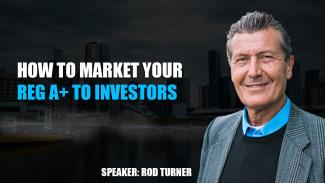
Rod Turner
Rod Turner is the founder and CEO of Manhattan Street Capital, the #1 Growth Capital service for mature startups and mid-sized companies to raise capital using Regulation A+. Turner has played a key role in building successful companies including Symantec/Norton (SYMC), Ashton Tate, MicroPort, Knowledge Adventure, and more. He is an experienced investor who has built a Venture Capital business (Irvine Ventures) and has made angel and mezzanine investments in companies such as Bloom, Amyris (AMRS), Ask Jeeves, and eASIC.
www.ManhattanStreetCapital.com
Manhattan Street Capital, 5694 Mission Center Rd, Suite 602-468, San Diego, CA 92108.
THIS TEXT TRANSCRIPT HAS ERRORS IN IT THAT WERE CAUSED BY THE SPEECH TO TEXT CONVERSION SOFTWARE WE USED. DO NOT DEPEND ON THE TEXT TO BE ACCURATE. WATCH THE RELEVANT PARTS OF THE VIDEO TO MAKE SURE YOU ARE PROPERLY INFORMED. DO NOT DEPEND ON THIS TEXT TRANSCRIPTION TO BE ACCURATE OR REFLECTIVE OF THE STATEMENTS OR INTENT OF THE PRESENTERS.
Depending on the nature of your offering there's no minimum but if you are let's say you're raising money to buy a building it costs 12 million dollars then you can't close escrow until you hit 12 million dollars by definition if that's the purpose of the raise but if you are raising money where the the legitimate strategy is to grow the business and to do the marketing the software development the development whatever it is that your business entails then you can do a zero minimum raise um obviously there are risks in any offering and you delineate those in the um in the risk factors of the of the offering but you can have a zero minimum in that case and there is no maximum that the sec applies except the number of investors that you can conveniently bring in right so minimum and maximum is straightforward um at least in many cases it's straightforward the investor can thing i took i talked about earlier that's a section 12g issue an important factor in doing an online raise of any kind is to is to make sure that you set a minimum investment amount that is not going to put off investors.
So if you think about this from the investor's standpoint in the reg d they're doing something else on their mobile phone or tablet uh in social media and they see an ad and they like it enough to click on it and then they arrive on the offering page and they're looking to see is it attractive is it interesting what are the terms you know what's the valuation what are what is the minimum investment amount and at this point literally it's a remarkably casual interest because they just arrived and they're as likely to leave after two or three seconds as they are to stay it's up to us to make it compelling so they stay but if you have a high investment minimum like 50k then a very large portion of those people that we spent good money you spent good money drawing in via the advertising are going to leave because at this point in the cycle 50k is way too much they're only casually interested our job is to get them to stick around long enough that we can convince them they should be putting in 50 100 or more but you you don't do that if you put them off with too large an investment amount up front normally we see companies choosing about a ten thousand dollar minimum because frankly in my opinion most accredited investors don't want to waste their time investing less than ten thousand dollars.
The hassle factor doesn't justify it okay so I'm touching on that yep you don't want people put off by and actually that's another issue I want to touch on here you do want to attract institutions to invest in a reg d and this applies in a reg d paired with a reg a plus and in a standalone reg d as well so it may be it may be wise to offer advantageous terms to people that invest more than a million dollars say so institutions will participate and having a high enough maximum can be an intelligent thing because you know a typical a typical institutional investor they may have a minimum investment amount of say eight million dollars and another rule that says they cannot be more than twenty percent of the total race right and you if you would like them to be able to invest then you need to have a maximum that's high enough to take that and and not have them be more than twenty percent of the total race so bear those sorts of things in mind as you're establishing the terms of your offering but what I'm getting at here is making it attractive to institutional investors as well.
THIS TEXT TRANSCRIPT HAS ERRORS IN IT THAT WERE CAUSED BY THE SPEECH TO TEXT CONVERSION SOFTWARE WE USED. DO NOT DEPEND ON THE TEXT TO BE ACCURATE. WATCH THE RELEVANT PARTS OF THE VIDEO TO MAKE SURE YOU ARE PROPERLY INFORMED. DO NOT DEPEND ON THIS TEXT TRANSCRIPTION TO BE ACCURATE OR REFLECTIVE OF THE STATEMENTS OR INTENT OF THE PRESENTERS.